Monday, September 19, 2016

"Huckleberry Finn as a sex offender"/ Justin Berry

May 23, 2016 "Huckleberry Finn as a sex offender": I cut out this article by Donna Bailey Nurse in the National Post on Oct. 22, 2011:

Lost Memory of Skin By Russell Banks
Knopf Canada
416 pp; $32
Reviewed by Donna Bailey Nurse

Most of Russell Banks’s best-loved novels are set in the small, economically floundering towns of New Hampshire and upstate New York, or in hardscrabble South Florida neighbourhoods. His mostly male, financially strapped protagonists find themselves pushed to the fringes of their communities by their own frustration, by the rejection of their neighbours, or by some sordid combination of both. Banks does not espouse nostalgia for an earlier era:

His is a fallen world. Characters such as Bob Dubois of Continental Drift, Wade Whitehouse of Affliction and young delinquent Chappie from Rule of the Bone recall only fleeting fragments of happiness and stability. He warns of an approaching world in which families are an anachronism, community no longer exists, and human relations — even sensations — are irrevocably altered.

Banks is part novelist, part cultural anthropologist, and never more so than in his latest novel, the strange and riveting Lost Memory of Skin. It’s the story of a young sex offender who ekes out an existence under a causeway in South Florida. The Kid, as he is known, is befriended by a professor interested in homelessness. He is not one of Banks’ run-of-the-mill outsiders. Convicted of attempting to have sex with a minor, he is cast out by society in a way that is vaguely uncomfortable for us to acknowledge. Indeed, the Kid, we soon realize, is more victim than victimizer — the product of an era in which family breakdown has dovetailed most unfortunately with the age of information.

The novel is set in Calusa, Fla., where the Kid grows up as the only child of a single mother. Working as a hairstylist and prowling for men leaves her with little time for her son. The Kid fills the gaping void by playing with his pet iguana and watching Internet porn. When his school makes laptops compulsory, he becomes a bona fide addict, consuming up to eight hours of skin flicks a day. At 22, the only women he knows are writhing images and the only skin he has stroked is his own. What are the psychological repercussions, Banks asks, of defiling our most basic instinct?

The Kid winds up in trouble after meeting a young woman online and arranging to visit her home. She is just 14, but he tells himself that she is probably more sexually experienced than he is. He never finds out, of course. He is gleefully ambushed by her father in the kitchen before a SWAT team takes him down. It is a pathetic and ludicrous scene familiar from reality TV. You have to feel sorry for the Kid who is so naive, so confused, so much younger than his 22 years. Yet he is also scrappy and determined to hold his own.

The Kid serves a few months in prison and is sentenced to nine years’ probation, the conditions of which demand he live at least 2,500 feet from any children. There are three possible locations: Calusa Airport, the Panzacola Swamp, and under the Claybourne Causeway. The Kid chooses the causeway.  He and his pet iguana live in a tent by the shore, away from a collection of huts and lean-tos. He is the newest member of a colony of sex offenders that includes a seventysomething ex-boxer and a slick bodybuilder. Like the others, the Kid must wear a GPS device to keep authorities apprised of his whereabouts. A quick Google search reveals his criminal status to all.

It is under the causeway that the professor finds the Kid late one night. He invites him to participate in a series of interviews on homelessness in exchange for some social and financial assistance. A tentative friendship evolves. In appearance, the Professor is the mirror opposite of the Kid: he is tall and morbidly obese. And like many of Banks’s characters, he also suffers from addiction. The obsession for food dominates his life. The Professor grew up an outsider in his own family. He has never connected himself to any group and instead has inhabited a number of conflicting, secret lives. He claims to have been a spy and a double agent; an anti-war activist and a Vietnam vet. Yet none of these facts reveal anything genuine about his life, just as the information on the Internet in no way explains the true nature of the Kid’s experience. However, when the professor’s past begins to catch up with him, he asks the Kid for help.

With Lost Memory of Skin Banks crosses a cautionary tale about human sexuality with an adventurous account of coming of age, an idiosyncratic union to say the least. It succeeds through an infallible execution of voice that conveys and contextualizes the Kid’s bemused and searching perspective. In time the Kid is revealed to be as much of a descendent of Huckleberry Finn as Chappie from Rule of the Bone. He is one of Banks’s poor, white boys whose imaginations furnish them with hope for the future. They are a far cry from the tragic grown men — like  this novel’s Professor — who never manage to outrun their pasts.

Banks is an avid outdoorsman and the backdrop of this story is animated by his intimate knowledge of the moods and inhabitants of land and sea. Rather than merely imagining the world of the novel, Banks seems to have constructed it with his bare hands. His sentences are so muscular they are practically three dimensional, yet they propel us forward with aerodynamic grace. His style is unmatched, inimitable, inseparable, as it should be, from the moral integrity of the man.


This is intense and disturbing for some readers.  I am forewarning you:

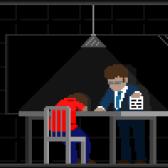
Aug. 25, 2016 Justin Berry: Here is a really old flashback of 2006.  He is this teenage guy who was on Oprah and how he got a webcam.  Then he was sexually abused by people on the internet.  If you knew me back then, you may remember the story and how I went on televisionwithoutpity.com forum and how there were pages of comments on it.  This is from 10 yrs ago, but I do remember it well.  There was a Law and Order: SVU ep based on it, and he later went on Larry King.  I watched those too.

Berry was 13 yrs old and then he got a webcam to meet people on the internet and mainly girls.  As soon as he got on the internet, he got all these people IMing him.  Later someone on the internet said "I'll pay you $50 if you do a webcam with your shirt off."  He thought nothing of it because he has been to the pool with his shirt off.  Then it got to take your pants off.  Then masturbate with the webcam on.  He thought nothing much of it because masturbation is a natural thing to do.  He was getting paid for it.

Then later there was something about meeting someone on the internet.  He told his mom he's going to Las Vegas for a tech conference.  He had a can of beer then he had sex with a guy.

His parents are divorced and he lives with his mom.  Later a kid at school found out about his webcam and posted pictures around at school.  Berry left school to move with his dad.  Later his dad found out about all this money he was making.  His dad helped him with the webcam show and didn't stop him.

Berry was having sex with prostitutes on his webcam. 

It was a very intense and serious episode.  I thought he was 100% victim.

Twop.com: Afterwards, I went to this website and I was shocked and surprised how there were so many comments saying he wasn't 100% victim.  I can't remember all the comments, but here are a few I do remember:

Some comments were like this:

"That's why you don't put a computer in the kid's room.  You put it in the living room so you know what your kid is doing on the internet."

"What kind of parent lets their kid go to Las Vegas by themselves, even if it's for a conference?"

Here is one that's kind of offensive:

"I'm sorry, but the whole time I was watching this, I was thinking about South Park.  You know where Cartman goes on the computer and he writes "I'm a 10 yr old boy" and everybody starts IMing him.

You guys are probably like:

A. That is offensive.

B. That is funny.

C. Both.

I was offended by that.  Then again, the person did give a forewarning.

After all those comments, I was undecided.

Friends opinions: I was 20 yrs old back then and here are some of my 20 yr old friends opinions.  Back then they said this, but they could change their opinion.

Who thought was 100% victim: Leslie.

Who thought he was not 100% victim:

Angela: I remember she came to my house and I asked her about it.  Her opinion was like how he was like a teenager, but he would have kind of known if he was right or wrong in this.

Sonia: No one was putting a gun at him and forcing him to do it in the room.

Seventeen magazine: In 2007, a story about a girl who was forced to take a naked picture of herself or something like that, because the person on the internet threatened to kill her and her family.

Human Trafficking: I saw this back in 2005.  The women are 100% victims.

In Prague, Czech Republic, the single mother Helena is seduced by a successful handsome man and travels with him to spend a weekend in Vienna, Austria; in Kiev, Ukraine, the sixteen-year-old Nadia is selected by a model agency and travels to the United States with the other selected candidates; in Manila, Philippines, the twelve-year-old American tourist Annie Gray is abducted in front of her parents. In common, the girls become victims of a powerful international network of sex traffickers leaded by the powerful Sergei Karpovich. In New York, after the third death of young Eastern European prostitutes, the obstinate Russian-American NYPD agent Kate Morozov convinces the Immigration and Customs Enforcement Chief Bill Meehan to hire her, promising him that she would fight against this type of crime and that he would not regret. - Written by Claudio Carvalho, Rio de Janeiro, Brazil


My experience: When I was watching Oprah, Berry did not say anything about being pressured into it.  In 2006, I would say in a way I was kind of pressuring and overwhelming this one person with all my emails.  I was sending like 3 little emails a day, which is a lot.  In 2016, I did apologize to him and all my friends in this email:


He accepted my apology.

In 2016, I did kind of made a mistake with this other friend of mine.  I bumped into him at the mall after work and he offered me a ride.  It was fun talking to him.  I then started emailing him on Facebook to go to all these Meetups that I go to.  He told me that I was being kind of pushy.  I did not mean to be pushy at all.

Aug. 26, 2017 Renegadepress.com: This is a Canadian teen TV show, kind of like Degrassi.  There was this episode where Patti was interviewing this girl with a webcam show.  Later Patti and the girl was offered that if you show your belly button on the webcam, you will get a camera.  The girls do it and they get the camera.

Later, they were offered $100 each if they are topless.  Patti felt the pressure, but I don't think she did it.


My opinion: In 2006 I was undecided if Berry was 100% victim.  Now that I gathered all this information and looked at a real magazine story and fictional shows, I have made a decision.

He is 50% victim.  No one threatened him through the internet or physically in person. He went to Vegas on his own.  He wasn't kidnapped like in Human Trafficking.  There is no sexism involved because he is a guy and he can't be a victim.  If a guy was kidnapped and forced to do things, then I would say 100% victim.

My main reason is that he was getting paid.  In Human Trafficking, the women became prostitutes and they weren't getting paid.
 
On Wikipedia, it says this:

Eichenwald requested demonstrations of the workings of Berry's online business which Berry provided, including live conversations with subscribers. After Berry revealed the identities of children who were being exploited by adults, Eichenwald persuaded him to discontinue the business and turn his information about those minors over to the authorities.[1]


If you want to know more about him, here it is: 


Sept. 11, 2016: I decided to look up about how far it is from California to Las Vegas.  It's like a 6hr drive.  I'm not sure if he flown or take a bus there.  I would say that is expensive to get there.


Sept. 13, 2016: Berry went on his own to Vegas.  He got money, time, and effort.  The money could have come from someone else he was meeting there.  If the predator came to Berry, that's another thing.

Counter argument: This is to the counter argument of Angela saying that as a teenager, you know what's wrong and what's right.  It varies on person to person and what kind of situation.

Teen pregnancy epidemic: I wrote about this before on Tyra Banks.  This girl Jessica wants to have a baby with her ex- boyfriend and feels like when the baby comes, he's going to want to be with her and raise the baby together.  There is also Sue- Ann who wants to have a baby too with her boyfriend because she knows how to take care of babies.

As a kid in elementary school, I know getting pregnant as a teenager is not a smart or good thing to do.  There are some teens who are really dumb.  Fortunately, Sue- Ann's mom was there and cried, that made Sue- Ann not get pregnant.  Also 6 months later, Jessica did come on the show to say she didn't get pregnant after she saw herself on TV.

I tried to find the Oprah episode on YouTube, but I can't.  The thing is, you don't know Berry at 13.  I do remember there was a video of Berry with his shirt off and talking to his webcam.  It was a clip on Oprah.


Bad behaviour: Also as a teenager, I'm sure a lot of us have smoke cigarettes, drank alcohol, done drugs.  We all know it's wrong, but a lot of teens do it.

Creep catchers: My friend Sherry sent this to me, but I already know about it from reading the Edmonton Journal.  She did send me one thing about Teen Mom.


I also wrote a blog post in Jun. 2016 about it:


Kyle Mac on Twitter: This also reminds me of the time I tweeted to Mac about seeing his demo reel on a private site.  I told him that he can email me in a new email of his, instead of his personal email address.  He created a new email and I got to see the demo.

I was imagining what he's thinking like: "I don't know Tracy.  I have never met her.  What if she emails me a lot?  What if she spams me?  What if she gives my email address to other people?  Then I would have to transfer my contacts to another account."
So that's why I told him to create a new one. 

I just want to say this: I don't want anyone to email me about sexual predators or teen pregnancy.  I am so done with it.  I have written so much about Dateline: To Catch a Predator in 2011-2012 and teen pregnancy in 2009-2010.  They are important topics, but I had written enough about it.

Sept. 14, 2016 Try Alpha: I like twop.com and how it can have deep and meaningful conversations about important topics.  I wish I did have my blog back in 2006 and I had copy and pasted all those Twop comments onto it as a reference.  However, I do have this blog for years and it's a good reference.

I have told you about this before.  I had went to a friend of a friend's house to have deep and meaningful conversations.


Monday, September 12, 2016

"Parenting galvanizes busy moms to reach for their dreams"/ "Nobody knows who he is"

May 23, 2016 "Parenting galvanizes busy moms to reach for their dreams": I cut out this article by Elizabeth Withey in the Edmonton Journal on Nov. 8, 2011:


EDMONTON - I call them the Michelles, but you may call them the M & Ms, or Mighty Mitch Squared.

The Michelles have never met but these two moms have so much in common, I can’t help but sing a little as I write: Matchmaker, matchmaker, make me a match ... Both women were born in the U.S.A. but call Edmonton home. Both have heaps of children, exceptionally supportive husbands. And both are emerging artists whose determination is yielding impressive results.

Michelle Ferguson is a federal prosecutor with five kids under the age of 11. Four of them play hockey, which means Ferguson spends her weekends doing one of three things — “driving to a rink, sitting at a rink, or driving home from a rink.”

Despite her workload and kidload, Ferguson managed to write a novel and get it published. From Away (Borealis Press, 2011) is in stores now.

“I was lying in bed one night and the whole first chapter started pouring out of my head,” Ferguson, 41, recalls. “I had to run downstairs and write it all down.”

The plot of From Away centres on Marion, a university student from Alberta who moves to rural Nova Scotia to have a quiet, contemplative summer. On her first day in town, she’s mistaken for a lobster thief and shot at. Soon, Marion finds herself entwined in a community of quirky Maritimers, including Crazy Hal, Schooner Button and matriarch Alice Lupin.

Now, no one would have argued with Ferguson if she’d said she was too busy, too tired to dabble in fiction. But to me, this woman is proof that moms — and dads — need not put their artistic ambitions on hold while child-rearing. That one needn’t choose, if the drive (and willingness to survive on five hours sleep) is strong enough.

In fact, becoming parent can actually be the creative spark. Kids require creativity — be it packing lunches, finding fun things to do during a blizzard, coping with behaviour — and that “creativity in one area spills over into other areas,” says C. Diane Ealy, author of The Women’s Book of Creativity.

During a rare quiet moment, Ealy explains, it will dawn on moms like Ferguson: “When I was a kid I liked doing x, y, z. I stopped doing it. I’m going to start doing it.”

Ferguson says parenthood provided the impetus to write. “I can’t tell my kids to follow their dreams if mine are sitting in my computer,” she says.

It’s the same for Michelle Murray, a mom of eight —yes, eight! — children who credits parenthood with getting the ball — er brush, — rolling.

“I don’t know if I would have found this avenue of work if I hadn’t been a parent,” the painter says. “I don’t know if I would have looked here. There’s such beauty here.”

Murray has wanted to be a painter since she was a teen. She thrived in art class in high school, even did some murals for Edmonton schools. For many years, she got tied up with raising a family. But, in 2003, she found her creative voice with oil painting.

“I knew right then, this was the medium for me,” Murray recalls.
Art is in Murray’s blood. One of her ancestors painted a church ceiling in Serra San Bruno, Italy, and her grandfather worked with oils. Now, with five children still at home, she is studying to be a professional.

“I set aside unmoveable painting time during the day,” Murray, 49, says. “I pray lots. The more scheduled you are, the more you get done. It’s surprising. Your time expands.”

The stay-at-home mom focuses on figurative work and still life. This month, she is basking in the sunshine of her first solo show, on at Pro’s Art Gallery in the city’s west end.

Ferguson is basking in the artistic glow, too. Last month, she was toasting her book’s arrival in the Edmonton Public Library. This month, she’s darting around to author appearances in Calgary and Edmonton. No nanny, no housekeeper, no ready-meals or fast food. Also, no idle time.

“Yes, I am crazy,” the author admits. “The writing part was the easy part. The touring and stuff, this is a little more difficult. But it’s a dream. It’s been a dream all my life to be published.”

Family, she says, made her extra-productive during her slivers of solo time. When her husband came home, he took over and she took off to a coffee shop. “When you only have four hours to complete something, you are very focused.”

Giller-nominated novelist Kathy Page says she found the constraints of small children “oddly helpful.” Every novel she’s written since becoming a mom has made an awards list. How? Nary a minute was wasted.

“I developed a habit of being able to think things through while I pushed a sleepy baby around the park, and an ability to work the moment I had half an hour free.”

One might assume that number of children bears an inverse relationship to time spent on creative expression. But “creativity and creative expression are energizing,” Ealy says. “There’s lot of activity going on in the brain. That’s a way that creativity begets more creativity. Pushing that down, saying I’m too tired, giving into the tiredness all the time, can actually result in our getting depressed. What’s happening in the brain when we’re creative is the exact opposite.”

“There is still a way to be true to ourselves,” Ferguson says. “A few hours a week is all it takes. A short block of time — and a good husband — can move mountains.”


Sept. 10, 2016 "Nobody knows who he is": I cut out this article by Giles Blunt into the Globe and Mail on Sept. 10, 2011.  He reviews Lynn Coady's book The Antogonist.  I have emailed Coady before because she was a writer-in-residence and she reviewed like the first 10 pages of my Rain script.  Her comment was that my script was fast-paced:

One could open a review of Lynn Coady's new novel, this week long-listed for the Scotiabank Giller Prize, by saying it's about a hockey enforcer. Certainly her protagonist, given the recent deaths of three real-world hockey “hit men,” arrives with a macabre, if accidental, timeliness. But The Antagonist is a full-bodied work of fiction, and to say it's about an enforcer is like saying The Catcher in the Rye is about a prep-school student – true, but absurdly reductive, especially since this is a novel that is all about how it feels to be categorized, dismissed, reduced by the very people who should know you best.

Rank, as the protagonist is known, has the unsettling experience of coming across himself as a character in a novel written by a former university pal he hasn't seen in 20 years. Outraged, Rank sits down at the computer and starts firing off e-mails. “You have taken something that was mine,” he says in his opening salvo, “and made it yours.”

Coady adopts this epistolary form with a knowing wink, making no attempt to write in textese (thank God), and only one brief, funny, reference to emoticons. The salient point about e-mail, for her purposes, is that it's ideally suited to the long-running rant. Epistolary novels often have varying points of view; rants never. Rank is going to tell his own story, and Dude, as one of Coady's characters might say, does he tell it.

In prose that is by turns angry, funny, tender and sad, he tells us what it was like to grow up as a boy who is continually mistaken, owing to his huge size, for a man, and one tough bastard at that. Cast by his father as the bouncer at his struggling ice-cream franchise, he delivers a skull-cracking blow that seriously disables a local miscreant. A term in juvenile corrections follows, and with it an even more tragic event that darkens Rank's life for years to come.

One quickly notices that Rank is a suspiciously well-read jock. For example, there are many references to T.S. Eliot's Prufrock, another character who “knows the eyes that fix you in a formulated phrase.” It turns out Rank eventually becomes a teacher, and sports fans may be disappointed to find very little hockey in these pages. What little there is has a moving payoff, however, when Rank rises to a heroic act of defiance for which he gives himself no credit whatsoever.

There is also a curious placelessness about the book. There are few references to the weather or season, and even fewer to actual towns or cities. There's an offhand mention of Hamilton, but it isn't deployed as a setting. Everything in this book unfolds in the head of its narrator. He's bashing away at the keyboard – sometimes first thing in the morning, sometimes at 3 a.m., haranguing his treacherous old friend or his recently rediscovered girlfriend – and setting the novel inside his hermetically sealed skull seems entirely appropriate. What is vivid to Rank is made vivid to us, and Rank is not thinking about weather.

Most vivid of all are the characters. Rank's father is a nasty bundle of nerves, a master of passive aggression and a dab hand with the vulgar putdown. At various times, Rank collides with a smart, caring social worker, a drug-addled conspiracy theorist and an evangelical Christian who manages to be both motherly and sinister at the same time. Best of all are “da guys.” In Rank's college buddies, Coady captures all the faux expertise, the grudging affection, the boozy solemnity and the logorrhea of one-upping, over-the-top insults to which the college age (okay, and older) male is prone. If you doubt that any female author could do justice to this thoroughly masculine mode of exchange, just check out their stoned – and hilarious – debate on Heraclitus.

Coady's previous books have received much praise and it's easy to see why, given all the gifts of storytelling on display here. The Antagonist is a fine novel about a crucial aspect of growing up: learning to resist the roles that others thrust upon us. Failure to do so can only result in waking up one day to find that, instead of protagonist, we have become the antagonists in our own life stories, continually behaving in ways that fill us with shame. As Rank takes control of the narrative, his outrage dies down, his understanding grows and something approaching inner peace becomes possible.


"Inside Pckwck"/ "Why fiction is good for you"

Jun. 29, 2016 "Inside Pckwck": I cut out this article by Abby Ohlheiser in the Edmonton Journal on Oct. 16, 2015: 

Joshua Cohen — who has already written what he considers his real, good novel about the Internet — is writing another novel this week. Except he’s doing it online, with the text appearing live on a public site, subject to the scrutiny and criticism of a small horde of anonymous commenters.

The book is called PCKWCK and it’s an adaptation of Charles Dickens’s early serialized success, “The Pickwick Papers.” The concept is also an anxiety nightmare come to life for anyone who writes.

“Uh-uh,” Cohen responded in a phone interview on Tuesday morning, before starting his second day of live writing, “try trying to do it.”

Every afternoon from 1 to 6 p.m., until the end of this week, Cohen will write at PCKWCK.com. The words appear as he types, like watching a group-edited Google doc. To the right of his writing, there’s an anonymous chat room. To the left, observers can watch a  webcam image of Cohen’s face. And on the big wide frame where Cohen’s novel is being composed, anyone can, Periscope-like, click the text and make a heart appear right on screen.

“It’s very difficult — I’ve found out now — to write with all of these hearts going everywhere,” Cohen told us. “Did you see those hearts?”
While the hearts might have interrupted Cohen’s writing as it happened, the comments were a bit more invasive in substance. The first day’s running chat was pretty much what you’d expect from an anonymous Internet forum, focusing its attention on the worth of a single person and his work: chaotic, funny, hostile and personal.

“There’s only a certain amount of times that I can read about how small my penis is,” Cohen said, after reading through the first day of comments. “It’s what I expected, you know? It’s what I expected. It’s what happens when you give the world anonymity.”

Cohen, whose “Book of Numbers” examines the extent of surveillance and the permeable boundaries of technology, has his reasons (both personal and public), for agreeing to participate in this madness — including the fact that the novel won’t stay online past its completion on Friday, a kind of mercy killing to a piece of writing that Cohen doesn’t expect to be very good.

“I, as a writer, am firmly from the generation of the book. Of the fixed text, of the text that you pore over and fuss over and that needs to be perfect,” he said. “The attention to the aesthetic whole and the formalist presentation of your best self. Right?”

But he thinks his generation is the last to have this particular relationship with the book.
“The ways that communication is enframed has deeply changed. These most perfect products, perfect cultural products that we make, are put out into the world and enframed by these very messy communications,” Cohen added.

“The idea that these, that these careless and thoughtless utterances, seem to be the primary modes bothered me. It also bothered me that I clung in my vanity to this sort of perfectionism.”

The idea for this undertaking comes from Cohen’s collaboration with Useless Press, run by Alix Rule, Adrian Chen and Sam Lavigne. “People watch video games being played by others (Twitch), other people going to brunch (Periscope),” Rule explained in an e-mail. “Why not watch a novel being written?”

Cohen chose “The Pickwick Papers” to adapt in part because of the novel’s own chaotic birth: It began as a series of loosely connected stories about a group of rich, adventuring Englishmen, published in serialized installments. The book was originally written to accompany a series of illustrations by a popular artist.

PCKWCK, fittingly, is being illustrated as Cohen writes by Leon Chang, a reintroduction of some of the particular uncertainties that Dickens faced when he was writing.

Importantly for PCKWCK, Dickens’s work wasn’t planned as what it became. Cohen was drawn to the story in part because it’s an “energetic book” driven by a group of characters who set out to help us understand our own world better, but instead occupy many of their adventures by “getting drunk and getting into fights.” While “Pickwick” largely focuses on the lighter side of what happens when rich men seek adventure out of self-interest, PCKWCK will examine the darker side of the same, Cohen said.

Cohen isn’t reading the comments as they’re posted each afternoon, he said, but goes through them all overnight, preparing to incorporate them into the next day.  Day one began without any such input, so Cohen set out alone to “establish some sort of narrative that would …. set up a story that would evolve through interrogation.”

PCKWCK began as a legal declaration written by a protagonist, Shamil Al-Waked, against PCKWCK, which — in this adaptation so far — is a mysterious, corporate-type entity. Cohen abandoned the form of the legal document after about 19 bullet points, instead abruptly placing the character into an interrogation and torture scene.

In some ways, Cohen isn’t being subtle at all in PCKWCK about what he wants to say: In the first chapter, Shamil, a writer, disappears from a public cafe while in the middle of carefully, slowly deliberating over a single sentence he’d written that wasn’t quite right. The resonances with Cohen’s own thoughts about the carefully chosen, perfect words and the volume and tone of today’s communicative realities are obvious

There’s still a lot to process personally, Cohen said, about this entire experiment, and he hesitated to wade into too dark of a territory while speaking to a reporter on Tuesday morning. For day two, he had one concern he wanted to address: that he was being too subtle about what he thought of the commenters.

“I was actually shocked — I don’t mean to sound like an a**hole — that when I got to the middle of the story, that people didn’t seem to see or care where it was going and that, as my commentators, they were being cast in the role of my future torturers,” he said.

For day two, Cohen set out to be “the opposite of subtle” on this point. “I’m going to be plagiarizing them, you know?” True to his word, Chapter Two begins with a lengthy cut-and-paste of some of the worst comments thrown his way from the first day.

You can participate in PCKWCK here, and the chatroom seems to work even when Cohen isn’t writing. It’s probably best not to wait until the whole project is finished to take a look at what Cohen has written. The entire thing disappears from the Internet on Friday after Cohen finishes and will become a very limited-run printed novel later this year. All proceeds from the printed result will go to the ACLU.


Sept. 10, 2016 "Why fiction is good for you": I cut out this article by Kate Taylor in the Globe and Mail on Sept. 10, 2011:


When psychologist and author Keith Oatley writes his next novel, he can make sure that each description of a scene includes three key elements – to better help the reader create a vivid mental image. Not one element; that would be forgettable. Not six elements; that might be boring.

He could have learned this from Anton Chekhov, master of the short story. Oatley, a great admirer of the Russian writer, recalls one Chekhov story that includes a description of a pond under snow. With a factory. Across from a village.

In fact, Oatley learned the lesson from a study that used MRI scans to show brain activity in readers: The area of the brain used to create a mental image was best activated when descriptive passages used three elements.


Oatley, professor emeritus of cognitive psychology at the University of Toronto, is also the author of three novels, including The Case of Emily V. which won the Commonwealth Prize in 1994, but his most recent work combines the two fields. Such Stuff as Dreams: The Psychology of Fiction is part of a growing movement to find hard evidence for a soft pursuit, looking to various sciences to explain the power of fiction. Contrary to the notion that art merely copies life, Oatley's argument is that a movie, play, story, poem or novel creates a mental model in which readers can try out ideas about themselves and others.

“If you say fiction to anybody, they immediately say ‘Oh, something that has been made up.' … What you really want to know is what is the subject matter of fiction,” he said. “The subject matter of fiction is what people are up to with each other and within themselves, what it is to be a self, interacting with others in the social world. … If you want to read about genetics you read [Richard]Dawkins or someone, and you get good at understanding genetics. If you read fiction, what you get good at understanding is what goes on between people.”

Oatley and his several colleagues are actually trying to measure that knowledge. In one study, they used a test in which subjects are asked to choose the emotion expressed in a photograph of a person's eyes, a measure of empathy developed by the British psychologist Simon Baron-Cohen, who studies autism. Fiction readers scored higher, even when the psychologists subtracted out influences that might suggest the more empathetic people would tend to read more fiction.

To further test that empathy is a product of reading fiction rather than the reverse, York University psychologist Raymond Mar experimented with two groups of randomly selected subjects, one of which read a short story and the other a piece of non-fiction. He then subjected them to a test of social reasoning and found the short-story group performed better.

Oatley would like to repeat such a study with a much larger group over a longer time period, perhaps signing up subjects who would agree to read only fiction or non-fiction for a year.

In another study, Oatley's UofT colleague Maja Djikic rewrote the Chekhov short story The Lady with the Little Dog as a piece of non-fiction, as though this story of an illicit love affair were the transcript of a trial. When asked to perform standard personality tests, subjects who had read the real thing instead of her rewrite showed more signs of shifts in character traits. And the more emotions they reported feeling during their reading, the more they changed. There was no particular direction to these shifts in personality: If propaganda, rhetoric or marketing aims to push the reader one way, fiction simply opens up the possibility of movement.

“It is not that one puts bread into a toaster and it makes toast,” Oatley said. “It is an opportunity for the reader or the movie watcher to change. It's not a straight causal effect.”

Stressing the studies are preliminary, he speculates the personality shifts may be produced by the reader entering into the fictional character's mind.

He uses the metaphor of a flight simulator to explain fiction's role in our lives: Just as the flight simulator allows the pilot-in-training to quickly and safely encounter all sorts of contingencies that might happen in the air, so fiction allows us to experience emotions in a safe place, training us to understand ourselves and others.

Jane Austen's Pride and Prejudice is a wonderful example of the simulator effect. In the novel, Elizabeth and Darcy, both of them intelligent and proud, initially misread each other, but gradually come to an understanding of one another's minds that will then grow into love. Oatley points out that the reader undergoes a similar process, coming to know and love the characters as Austen unfolds their story, thus experiencing the same dawning understanding and growing attachment.

“That is a beautiful structure,” he said.
This function also explains why reading groups are popular, and in Oatley's scheme, very important: They take the emotional training and multiply the effect.

“When you read the book yourself you have a particular understanding, but it is always very partial, so the moment you start talking with someone else about it, you are increasing the amount of brain power and coming at if from all these different directions,” Oatley said. He has participated in the same book club for 20 years and finds its discussions often deepen his understanding not just of the book, but also of his friends in the group.

So, a book club improves what psychologists call “theory of mind.” Acquired around the age of five, theory of mind is our awareness of our own and others' consciousness – and of the possibility they may believe something different from us.

U.S. English professor Lisa Zunshine was one of the first to suggest fiction trains us in theory of mind. Similarly, U.S. philosopher Martha Nussbaum has argued that fiction teaches empathy, and so should be required reading for public leaders.

Following that work, Oatley's cognitive approach is part of a trend toward seeking concrete explanations for literature's utility both inside and outside the English department. The so-called literary Darwinists see evolutionary purposes behind a kind of mental training that is crucial to living in groups, and argue that storytelling has evolved as an art form because of the prestige that accrues to the socially necessary storyteller.

The evolutionary theorists put great emphasis on the storyteller; Oatley prefers to give pride of place to the reader. But both schools do permit their practitioners to judge the writer's art, even as some literary critics complain these new approaches are reductionist. Brian Boyd, a Nabokov scholar from New Zealand, subjects The Odyssey and Horton Hears a Who to evolutionary criticism in his recent book On the Origin of Stories: Evolution, Cognition and Fiction. He shows how the master storyteller holds his audience's attention and draws it toward particular aspects of his tale: Through the sympathetic Horton, Dr. Seuss makes us feel for the plight of the microscopic Whos.

For his part, Oatley is convinced that the better the writer, the more powerful the simulation, and he makes a distinction between literary fiction and genre fiction.

“You can have a good read, but it is sort of like going on a roller coaster. The engineers have constructed it so you have a particular set of experiences. You get off, your heart is beating a bit, but you are still the same person,” he says of reading a thriller or detective story. On the other hand, “Chekhov was a great artist: The effect is different – the extent to which [the reader]can really inhabit another mind.”

The roller coaster may be fun, but the flight simulator … now that's art.

My opinion: This is like a psychology article.